


Dhaka air among world’s worst, ranks 5th on Wednesday morning
Published:
২২ অক্টোবর ২০২৫, ১২:৩২
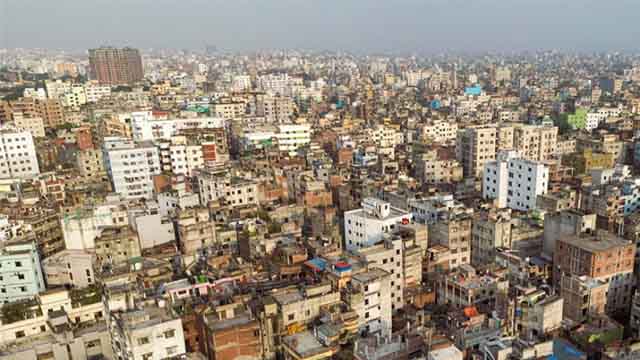
Dhaka, the overcrowded capital of Bangladesh, ranked fifth on the list of cities with the worst air quality on Wednesday morning, recording an Air Quality Index (AQI) score of 164 at 9:35am.
According to the index, Dhaka’s air was classified as “unhealthy,” posing a risk to public health. The city has been experiencing poor air quality for several consecutive days, which appears to be worsening with the onset of winter.
An AQI reading between 150 and 200 is considered “unhealthy,” while values above 300 are categorized as “hazardous,” posing serious health risks.
India’s Delhi, Pakistan’s Lahore, and the Democratic Republic of the Congo’s Kinshasa ranked first, second, and third respectively, with AQI scores of 277, 244, and 192.
The AQI, used to report daily air quality, measures the concentration of key pollutants including particulate matter (PM2.5 and PM10), nitrogen dioxide (NO₂), carbon monoxide (CO), sulfur dioxide (SO₂), and ozone (O₃).
Dhaka has long struggled with severe air pollution, particularly during the dry winter months when dust and emissions accumulate. Air quality typically improves during the monsoon due to rainfall that helps settle airborne particles.
According to the World Health Organization (WHO), air pollution causes around seven million deaths globally each year, primarily from stroke, heart disease, chronic respiratory diseases, lung cancer, and acute respiratory infections.

Comment: