


Bangladesh could lose 5.6m jobs due to AI expansion: Debapriya
Published:
৭ মে ২০২৬, ১৭:২৬
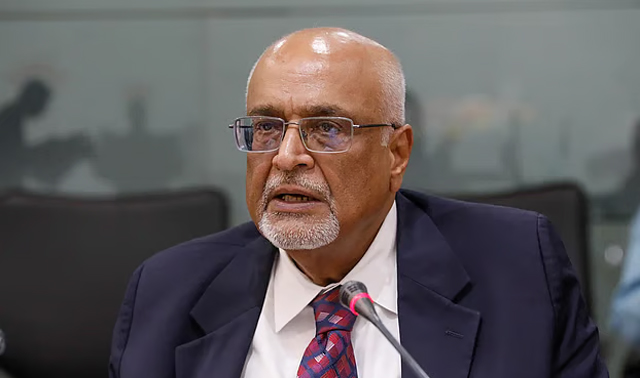
Prominent economist Debapriya Bhattacharya on Thursday warned that artificial intelligence, robotics and rapid technological disruption could eliminate as many as 5.6 million jobs in Bangladesh, raising urgent questions about the country's readiness for a fast-shifting labour market.
Speaking at a dialogue titled “Government Priorities and the Education Sector: Budget and Reality” arranged by Citizen's Platform for SDGs, Bangladesh at the Bangladesh-China Friendship Conference Centre in Agargaon, he said the challenge runs deeper than job losses alone.
“AI could eliminate 5.6 million jobs in Bangladesh. Even if 5 million technology-driven jobs are created in their place, the real question is whether Bangladesh has prepared itself to compete for them,” said Debapriya, Centre for Policy Dialogue (CPD) Distinguished Fellow.
He stressed that the country's young workforce faces a severe skills and training deficit that could lock them out of emerging employment opportunities, regardless of how many new positions the digital economy generates.
Shifting focus to education policy, the economist argued that the national priority must move beyond access to quality and measurable outcomes.
“Students are enrolling in schools, but what standard of learning are they leaving with? That is now the defining question,” he said, calling for a broad-based movement around outcome-linked accountability in education.
Debapriya noted that discussions were underway to transform the education agenda into a political and social movement, including a proposed joint initiative with newly elected members of parliament. “We believe what Bangladesh needs most right now is an education movement. Whenever we have gone to people ahead of elections and asked about their aspirations, quality education has always topped their list.”
On the government's stipend programme, he cautioned that financial transfers alone cannot address the true cost burden faced by poor and marginalised families. “Stipends help, but they fall far short of covering all the expenses that make education unaffordable for disadvantaged households.”
The economist framed the country's educational imperative in a shift of strategic emphasis from the earlier goal of universal enrolment to a new mission of ensuring learning outcomes. “We once fought for access to education. Now we must fight for the outcomes of that education.”
He also underscored that meaningful reform in education requires political and social mobilisation, not just technical recommendations, and that sustaining Bangladesh's development trajectory would be impossible without a qualitative leap in its education system.
State Minister for Primary and Mass Education Bobby Hajjaj attended the event as the chief guest, while CPD Additional Director (Research) Towfiqul Islam Khan delivered the keynote paper.

Comment: