


Bangladesh and India present their stance on border ‘push-ins’
Published:
১০ জুন ২০২৬, ১১:৩৪
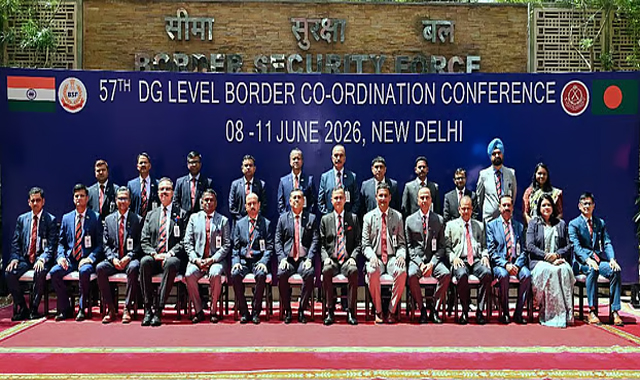
Bangladesh and India once again took different positions on the ongoing ‘push-in’ attempts by India at the director general-level talks, between the border forces of the two countries in New Delhi. While Bangladesh termed such attempts illegal, inhumane and a violation of international law, India maintained that it is repatriating illegal foreigners according to its domestic laws and established procedures.
The main discussions took place on Tuesday, the second day of the 57th BGB-BSF Director General-level conference. Alongside the push-in issue, the meeting prioritised taking effective measures to stop the killing, injuring and torture of unarmed Bangladeshi citizens at the border. Both sides presented their respective positions on various border-related issues.
BGB Director General Major General Mohammad Ashrafuzzaman Siddiqui presented Bangladesh’s stance in a written statement during the four-day conference. BSF Director General Praveen Kumar explained India’s position in his remarks.
According to the schedule, both sides will discuss the finalisation of the Joint Record of Discussions (JRD) on Wednesday. The conference is expected to conclude on Thursday with a joint press conference.
According to BGB headquarters data, between 7 May 2025 and 26 January this year, the BSF pushed 2,479 people into Bangladesh over eight months. Among them, 120 were Indian nationals. However, attempts at push-ins along the border increased again from May this year.
This was the first meeting between the chiefs of the two border forces since the BJP came to power in West Bengal. Following the change in government in May, the BJP administration led by Chief Minister Suvendu Adhikari launched the ‘detect, delete and deport’ or ‘Three-D’ campaign.
The drive is reportedly aimed at so-called Bangladeshi nationals living in the state without valid documents. Suvendu Adhikari has already claimed in the media that at least 4,880 “infiltrators” have been sent back to Bangladesh.
Stances on the ‘push-in’ issue
According to diplomatic sources in New Delhi, the heads of the BGB and BSF outlined their respective positions on the ‘push-in’ issue during yesterday's meeting.
Sources said the BSF director general’s remarks mirrored the stance held by the Indian Ministry of External Affairs over the past year. India maintained that action regarding illegal foreigners, including Bangladeshi nationals, is being taken in accordance with domestic laws and procedures. They asserted that illegal individuals from Bangladesh are being repatriated by following both Indian laws and the existing bilateral mechanisms between the two countries.
Justifying the handover of over 2,800 Bangladeshis to the BGB, the BSF claimed that the Indian border force is operating strictly within established procedures.
As always, the BSF once again raised the issue of handing over lists of illegal individuals to Bangladesh for repatriation. They alleged that once a list is provided to Bangladesh, the process gets stuck in prolonged delays. In this context, the issue of providing such lists over the past five years was also brought up.
In response, the BGB strongly articulated why ‘push-ins’ are illegal. Bangladesh argued that these actions violate human rights and humanitarian procedures and fail to follow existing international law.
Bangladesh maintained that it remains committed to bringing back its citizens from any country, including India, once their citizenship is verified. However, this must be done through proper legal channels, respecting human rights and international humanitarian standards.
Therefore, there is no scope for unilaterally forcing people across the border. Such acts are illegal. Bangladesh also raised serious questions regarding the attempt to push people across the border at night.
Bangladesh also addressed the BSF's allegations of delays in the verification process, specifically highlighting the steps and measures taken by Dhaka since May last year to expedite the matter.
The meeting’s agenda also included curbing the smuggling of drugs, weapons and other prohibited goods from India to Bangladesh, preventing human trafficking, ending border violations and addressing the construction of unauthorised infrastructure, such as barbed-wire fences, within 150 yards of the international border.
Advisor hopes for swift resolution
Responding to a question regarding border push-ins during a press conference at the Secretariat on Tuesday, Zahed Ur Rahman, Information and Broadcasting Advisor to Prime Minister Tarique Rahman, noted that ‘push-ins’ were a significant issue during the West Bengal elections.
While acknowledging that this is an internal political matter for India, the advisor admitted it has placed some pressure on Bangladesh.
“I don’t believe the Indian government is doing this to create tension with Bangladesh,” the advisor said. “The new government that was elected to power in West Bengal had certain election promises. They have their own politics and this is an expression of that.”
The advisor expressed strong belief that the new governments in both Bangladesh and India are eager to move past the diplomatic friction seen during the Muhammad Yunus-led administration following the events of 5 August. Having had some discussions himself, he believes both nations are committed to a fresh start.
He concluded by saying that although there is an initial crisis, he expects a swift resolution.

Comment: