


Seaports Under Threat from Climate Change Impacts
Published:
১৬ জুন ২০২৬, ১৪:৩৩
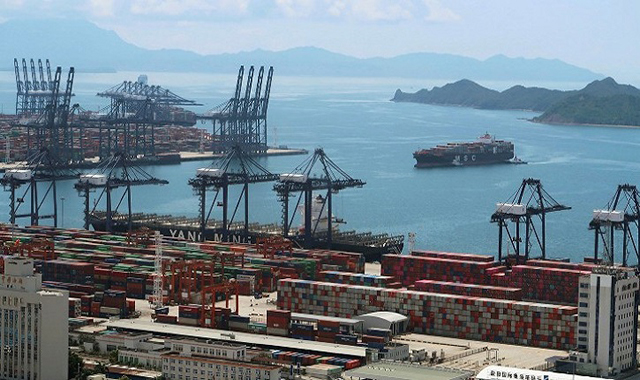
Coastal nations surrounding the Bay of Bengal are increasingly facing severe risks due to the accelerating impacts of global climate change. Excessive sedimentation carried by rivers is rapidly reducing the navigability of maritime channels and coastal waterways near major seaports in these countries.
As a result, the movement of large vessels is becoming increasingly difficult. At the same time, rising sea levels—driven by climate change—are intensifying the vulnerability of low-lying coastal regions. Even moderate rainfall or minor storm surges are now enough to inundate vast areas, a phenomenon already evident in recent years in Chattogram city.
Countries most affected include Bangladesh, Myanmar, Thailand, and India’s West Bengal region. However, experts warn that Bangladesh is particularly at risk, as all three of its international seaports—Chattogram, Mongla, and Payra—are under significant threat.
Multiple international studies and expert analyses suggest that without immediate and effective intervention, the operational capacity of these ports could decline drastically. By 2030, some of these seaports may lose their deep-water functionality and effectively turn into inland river ports, severely disrupting regional trade dynamics.
Chattogram Port, widely regarded as the economic lifeline of Bangladesh, handles nearly 80 percent of the country’s import and export activities. Cargo throughput has grown significantly over the past decade. According to port authority data, cargo handling increased from approximately 45 million tons in the 2010–11 fiscal year to over 118 million tons in 2021–22, reflecting rapid expansion in trade volume.
Despite this growth, limitations in channel depth prevent large mother vessels from docking directly at the port’s jetties. As a result, Bangladesh remains heavily dependent on lighter vessels for cargo transshipment. To address this, construction of a deep-sea port at Matarbari is currently underway.
Meanwhile, sediment deposition remains a critical challenge. Each year, more than 10 million cubic meters of river-borne silt accumulate in coastal channels, steadily reducing navigability. Combined with rising sea levels, this is accelerating coastal erosion and threatening infrastructure around port areas.
Mongla and Payra ports, located near the ecologically sensitive Sundarbans region, are particularly vulnerable. Experts have identified this coastal belt as one of the most climate-sensitive zones in the world.
Research indicates that sea levels along the Sundarbans coast have risen at an average rate of approximately 30 millimeters annually over the past two decades, contributing to nearly 12 percent shoreline erosion. Globally, according to the Intergovernmental Panel on Climate Change (IPCC), sea levels rose at an average rate of 3.7 millimeters per year between 2006 and 2018.
In Chattogram, the situation is further complicated by the declining depth and width of the Karnaphuli River, where the port is located. Insufficient dredging has led to significant sediment accumulation at jetty points, posing a serious threat to vessel movement and port operations.
Climate experts emphasize that the crisis is not limited to Bangladesh but affects all Bay of Bengal nations. A joint report by the Netherlands Institute of International Relations and India-based think tank Institute of Peace and Conflict Studies (IPCS) highlights growing climate-related threats to regional security and governance.
The report underscores the urgent need to integrate climate security into the Bay of Bengal’s broader strategic framework, especially at a time when geopolitical competition in the region is intensifying.
Professor Prabir De, a senior researcher at the ASEAN-India Centre under the Research and Information System for Developing Countries (RIS), warns that by 2030, many seaports in Bangladesh, Myanmar, Thailand, and eastern India could lose their capacity due to sedimentation and climate-induced disruptions. This would significantly impact economic growth and trade efficiency.
Environmental expert and former Director General of the Water Resources Planning Organization, Engineer M. Inamul Haque, described the situation as no longer a problem but a full-scale crisis. He stressed that rising sea levels and heavy sedimentation are threatening not only port channels but entire coastal ecosystems.
“If the situation remains unchanged, the functionality of Chattogram, Mongla, and Payra ports could decline sharply. Maintaining operational capacity in the coming years will be a major challenge,” he warned.
Experts unanimously agree that without strategic planning, large-scale dredging, and investment in deep-sea port infrastructure, the region’s international trade could face severe disruption in the near future.
The time for action, they say, is now.

Comment: