


Rising Heatwaves in Bangladesh: A Growing Climate Emergency
Published:
২২ জুন ২০২৬, ১৩:৪৯
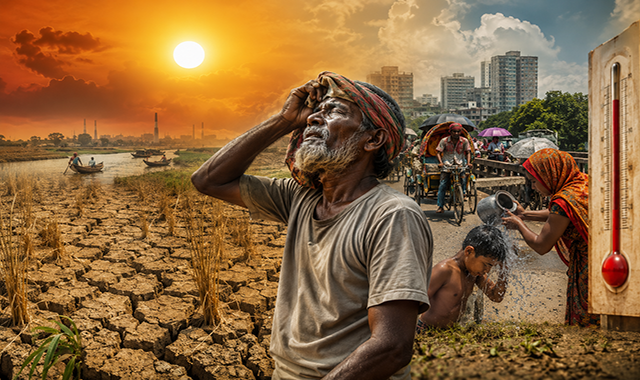
Bangladesh has long been recognized as one of the countries most vulnerable to climate change. For decades, it has faced recurring floods, cyclones, riverbank erosion, and rising sea levels. In recent years, however, another serious threat has intensified—extreme heat. What was once a predictable feature of summer is now evolving into a prolonged and dangerous environmental and public health crisis.
Heatwaves across Bangladesh are becoming more frequent, more intense, and longer in duration. Record-breaking temperatures are no longer rare occurrences; instead, they are increasingly part of a broader pattern linked to global climate change. From urban centers to rural communities, the impacts are being felt across all sectors of society.
Daily life is increasingly disrupted during extreme heat events. Streets become nearly uninhabitable during daytime hours, schools and workplaces struggle to function, and hospitals report a surge in heat-related illnesses. Farmers face mounting losses as crops fail under excessive temperatures. Heatwaves are no longer seasonal discomforts—they represent a growing national challenge affecting health, food systems, water security, biodiversity, and economic stability.
Scientific evidence clearly links this trend to human-induced climate change. The continuous rise in greenhouse gas emissions has led to a steady increase in global temperatures. According to global climate assessments, heatwaves are among the most immediate and visible consequences of this warming. South Asia, including Bangladesh, is particularly vulnerable due to its geographic location, dense population, and socioeconomic conditions.
With a population exceeding 170 million people within a limited land area, Bangladesh faces immense pressure on its natural resources. Rising temperatures further strain these resources, creating a cycle of environmental stress that threatens both ecosystems and human well-being.
Agriculture, a key pillar of the country’s economy, is especially at risk. Millions of people rely directly or indirectly on farming for their livelihoods. Extreme heat disrupts agricultural processes by reducing photosynthesis, increasing water demand, and accelerating soil moisture loss. Crops such as rice, vegetables, and fruits become highly vulnerable to heat stress, resulting in lower yields and diminished quality.
Changing rainfall patterns have further complicated the situation. Unpredictable precipitation makes it difficult for farmers to plan planting and harvesting cycles. When heatwaves coincide with drought conditions, agricultural losses can be severe, posing a significant threat to national food security.
Water resources are also under increasing pressure. Higher temperatures accelerate evaporation from rivers, ponds, and wetlands, reducing surface water availability. As a result, reliance on groundwater has intensified, leading to declining water tables in several regions. This affects irrigation, drinking water supply, sanitation, and industrial activities.
The burden of water scarcity is often disproportionately carried by women and children in rural areas, who must travel longer distances to collect water. Reduced river flow also impacts fisheries, biodiversity, and local economies that depend on aquatic ecosystems.
Bangladesh’s rich biodiversity is another area of concern. The country’s diverse ecosystems, including wetlands, forests, and coastal mangroves, are highly sensitive to temperature changes. The Sundarbans, the world’s largest mangrove forest, faces increasing risks from rising temperatures and changing salinity levels. Wildlife species, including the Royal Bengal Tiger and numerous aquatic organisms, are under growing ecological stress.
The consequences of biodiversity loss extend beyond environmental damage. Ecosystems provide essential services such as food production, water purification, and climate regulation. Their degradation ultimately affects human livelihoods and long-term sustainability.
Public health impacts are among the most immediate effects of heatwaves. Prolonged exposure to high temperatures can lead to dehydration, heat exhaustion, heatstroke, and other serious health complications. Vulnerable groups—including children, the elderly, pregnant women, and individuals with chronic illnesses—face heightened risks.
Outdoor workers, such as farmers, construction workers, and transport laborers, are particularly exposed, often working long hours under direct sunlight with limited access to cooling or hydration. In urban areas, the situation is worsened by the “urban heat island” effect, where dense infrastructure traps heat, making cities significantly warmer than surrounding rural regions.
Low-income communities are especially vulnerable due to limited access to proper housing, ventilation, and healthcare services. For many, coping with extreme heat is not just difficult—it can be life-threatening.
Heatwaves also have psychological consequences. Prolonged exposure to extreme temperatures has been linked to increased stress, sleep disturbances, anxiety, and irritability. Studies suggest a connection between rising temperatures and higher levels of social tension and mental health challenges, particularly in economically stressed communities.
The economic impact of heatwaves is equally significant. Excessive heat reduces labor productivity across sectors such as agriculture, construction, and manufacturing. Workers are often forced to reduce working hours, leading to income losses. At the same time, healthcare costs rise, and energy demand increases due to greater use of cooling systems, placing additional pressure on national infrastructure.
Addressing this growing crisis requires immediate and coordinated action. While heatwaves cannot be prevented, their impacts can be minimized through effective adaptation strategies.
Developing comprehensive heat action plans should be a priority. These plans should include early warning systems, public awareness campaigns, emergency response measures, and targeted support for vulnerable populations. Strengthening healthcare systems to manage heat-related illnesses is equally important.
Urban planning must incorporate climate-sensitive solutions. Expanding green spaces, increasing tree cover, and promoting climate-resilient infrastructure can help reduce urban temperatures. The use of reflective building materials and improved ventilation systems can also play a significant role.
In the agricultural sector, adopting heat- and drought-resistant crop varieties, improving irrigation efficiency, and promoting sustainable farming practices are essential steps. Enhancing water management through conservation, pollution control, and groundwater recharge is also critical.
At the global level, the issue of climate justice remains central. Bangladesh contributes minimally to global emissions but faces disproportionate impacts. Greater support from developed nations in the form of climate finance, technology transfer, and capacity building is essential.
The intensifying heatwave crisis highlights that climate change is no longer a distant concern—it is already reshaping daily life in Bangladesh. The choices made today will determine how effectively the country can adapt to a hotter future.
Heatwaves are becoming a defining feature of a warming world. The challenge now is not whether they will occur, but how prepared Bangladesh will be to protect its people, economy, and environment.
Timely action can transform this crisis into an opportunity to build resilience and ensure a sustainable future. Failure to act, however, will leave the next generation facing a more extreme and unequal reality.

Comment: