


Fakhrul Opposes Banning Awami League, Warns of Democratic Risks
Published:
২ অক্টোবর ২০২৪, ১৩:০০
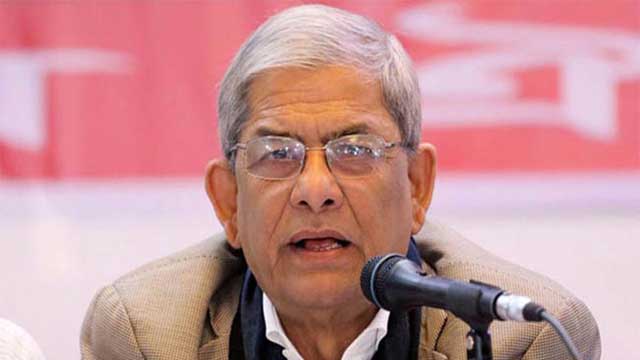
BNP Secretary General Mirza Fakhrul Islam Alamgir has opposed the idea of banning the Awami League from participating in the upcoming national election, despite describing the party as "politically bankrupt" and out of touch with the public, especially the youth. In an interview with UNB, Fakhrul argued that labeling the Awami League as a fascist party or barring it from elections would be detrimental to democratic norms.
He voiced concerns about the Awami League’s political future, pointing to its growing reliance on bureaucracy and state forces, which he claims has isolated the party from the public. Fakhrul emphasized that, while the party has been accused of undemocratic practices, banning any political organization, including the Awami League, would not solve the problem. He cited past failures, such as the banning of Jamaat-e-Islami, to support his point that such actions often lead to political re-emergence rather than resolution.
Referring to the proposal to amend the International Crimes (Tribunals) Act, 1973, which could ban political parties for up to a decade for crimes against humanity, Fakhrul warned against using legal measures to eliminate political actors. Instead, he advocated for allowing democratic processes to determine a party's fate.
Fakhrul also raised concerns over potential depoliticization efforts, drawing parallels to the events of 1/11, when local and international actors attempted to disrupt political stability in Bangladesh. He urged all political parties to remain vigilant and avoid actions that could undermine democracy, warning that similar plots might be underway once again.
In the wake of a student-led movement that played a significant role in toppling the Awami League, Fakhrul believes the party's growing disconnection from the people, especially the younger generation, will make it difficult to regain public trust. He stressed that the only path forward for any political party should be through fair competition and democratic practice, not through exclusion.
(Source: UNB)

Comment: