
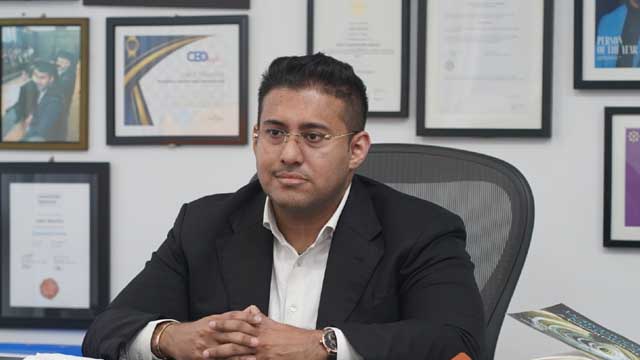
Sakif Shamim, Managing Director, LabAid Cancer Hospital & Super Specialty Center LabAid
Preparing for global conquest in leather industry: Need for technological and policy support
Published:
৩০ আগষ্ট ২০২৫, ১৫:২৩
The leather industry has emerged as a very promising sector in the economic growth of Bangladesh. It is the second largest foreign exchange earner in the country after the ready-made garment industry. However, for this industry to occupy the top position in the global market, it is not enough to just utilize the potential, but also requires a well-planned strategy, use of modern technology and appropriate policy support. The global market for leather and leather products is more than $400 billion, which is likely to increase to $550 to $600 billion by 2030. Bangladesh's share in this huge market is still very limited. To increase this share, our preparations must be multifaceted and far-reaching.
We now have to come out of the system and ensure the use of environmentally friendly and advanced technology. Although the old tanneries of Hazaribagh have been shifted to Savar, environmental pollution is still a big challenge. Since the Central Effluent Treatment Plant (CETP) in the leather industry city of Savar is not fully functional, river and environmental pollution continues. To enter the international market, it is essential to reduce our carbon footprint and comply with environmental regulations. To this end, efforts should be made to make the tanning process more environmentally friendly by using advanced chemicals and technology.
Advertisement
In addition, the use of automation and digital technology at every stage of the production process will increase the efficiency and quality of this industry. From leather product design to finishing, the use of advanced technology can reduce waste and production costs. This will make our products more competitive in the international market. It is important to provide loans and government support on easy terms to encourage local entrepreneurs in this technological transformation.
Modern methods are also needed in the collection and storage of raw materials. Due to the lack of proper storage and processing of raw leather, a large portion is lost every year, which is a big loss for the industry. To reduce this loss, the number of modern cold storage and fast processing units should be increased. At the same time, it is very important for businesses involved in this industry to obtain certifications such as: ISO 14001 (Environmental Management) and ISO 9001 (Quality Management) to gain the trust of international buyers.
To make the leather industry competitive in the global market, the use of technology alone is not enough, proper policy support is needed. The government should formulate a long-term and stable policy for this sector. Special exemptions in customs and taxes, ease of import of raw materials and further simplification of the export process will encourage industrial entrepreneurs. In addition, the government must give special importance to the following issues and take effective measures for development.
- Research and Development (R&D): Increasing investment in the research and development sector is very important for the development of this industry. The public-private partnership (PPP) model can be effective for research on new product innovation, improving product quality and environment-friendly production processes.
- Creation of skilled manpower: There is no alternative to skilled manpower to work in sync with modern technology. To this end, it is necessary to introduce specialized courses for the leather industry in technical educational institutions, appoint skilled trainers and establish close ties between industry and educational institutions.
- Branding and Market Expansion: The branding of Bangladeshi leather products in the international market is very weak. Regular exhibitions, trade fairs and road shows can be organized abroad to showcase Bangladeshi products as high-quality products. At the same time, diplomatic and commercial initiatives need to be taken to enter new markets, such as Latin America and Africa.
To realize the dream of global conquest in the leather industry, a concerted effort is required from the government, industrialists and workers. Not only the goal of increasing exports, but also building a sustainable industry by ensuring environmental and social responsibility should be our main objective. Global buyers now not only look at the quality of the product, but also verify ethical and environmental standards.
If Bangladesh can strengthen the leather industry through modernization, environmental friendliness and policy support by addressing these challenges, this industry will very soon become a driving force for the country's economic growth like the ready-made garment industry. This will not only increase foreign exchange earnings, but will also ensure employment for millions of people and strengthen the country's economic base.

Comment: