
British shoppers bought more bottled water, canned goods and hand sanitizer after the government urged households to prepare for emergencies, but shopping data show no sign of panic buying.
Sales of essentials rose in the 10 days after the government launched its Be Ready campaign. The campaign encourages households to prepare for up to three days of disruption to essential services caused by incidents such as cyberattacks or extreme weather.
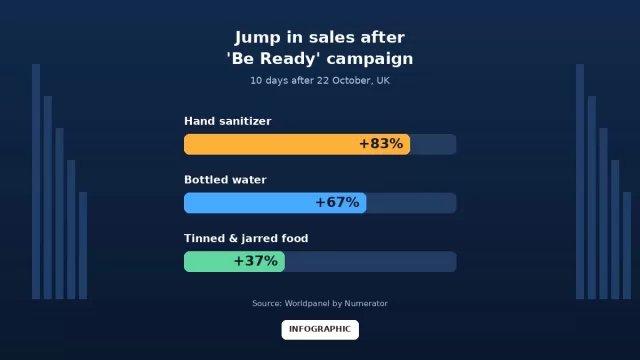
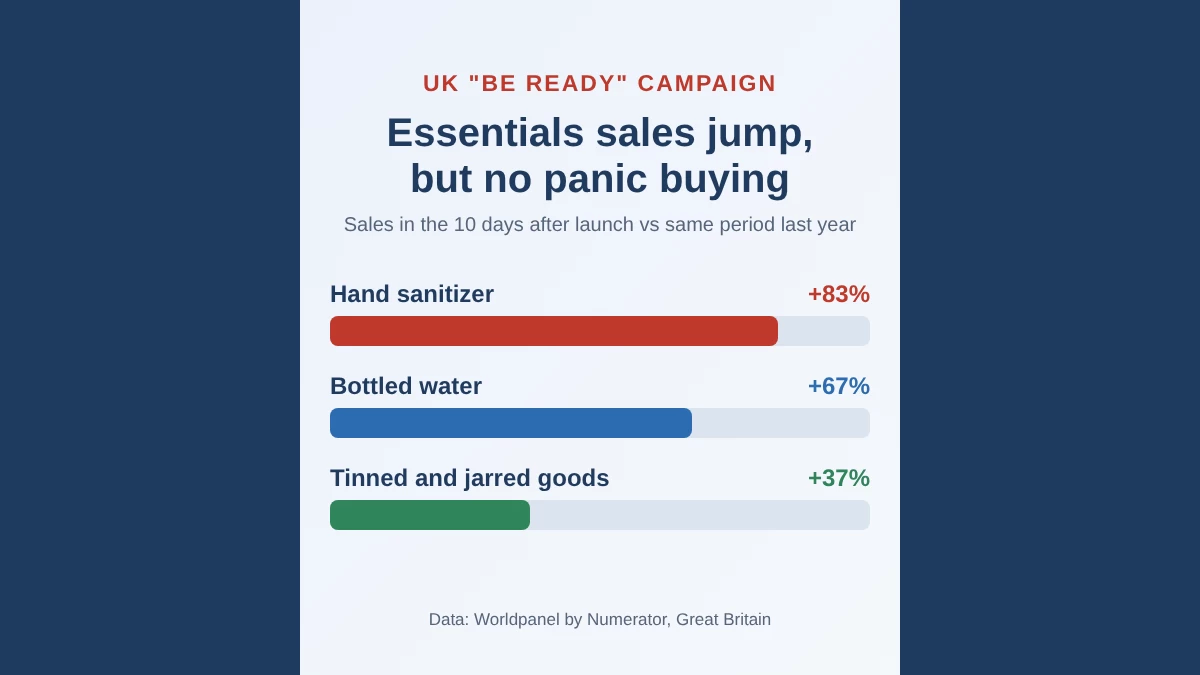
Compared with the same period last year, hand sanitizer sales rose 83%, bottled water sales rose 67%, and sales of canned and jarred goods rose 37%. The figures come from Worldpanel by Numerator’s monthly grocery report for Great Britain.
The number of people buying canned meat each day rose 43% after the launch, equal to about 400,000 extra shoppers a day.
Fraser McKevitt, head of retail and consumer insight at Worldpanel by Numerator, said shoppers clearly noticed the campaign, but fewer than a third of households bought bottled water in October. “Growth came from more people adding the recommended items on the government’s checklist to their weekly shop, not from shoppers piling their trolleys high,” he said.
Separate research from Barclays last week found 27% of people were stockpiling, or considering stockpiling, food and drink. Among 18- to 34-year-olds, 31% said they had enough food and drinking water for at least three days, compared with 53% of those aged 55 and over.
Grocery inflation rose to 2.6% in the four weeks to November 1, up from 2.5% the previous month, after slowing in the summer. McKevitt said household budgets had already taken a hit from the latest rise in the energy price cap in October, and shoppers would watch prices closely this winter.
Sales at Britain’s grocers rose 2.2% year on year in October. Ocado’s sales rose 12.3% in the 12 weeks to November 1, lifting its market share to a joint record high of 2.3%. Marks & Spencer, which part-owns the Ocado retail business, raised its own grocery sales by 14.6%.
Lidl overtook Morrisons to become Britain’s fifth-biggest grocer, as its sales rose 6.6% and its market share reached 8.6%, against 8.3% for Morrisons. Asda was the only big grocer to report a sales dip, of 0.5%. Its market share fell from 11.6% to 11.3%, though it is still the third-biggest supermarket.
Source: The Guardian