
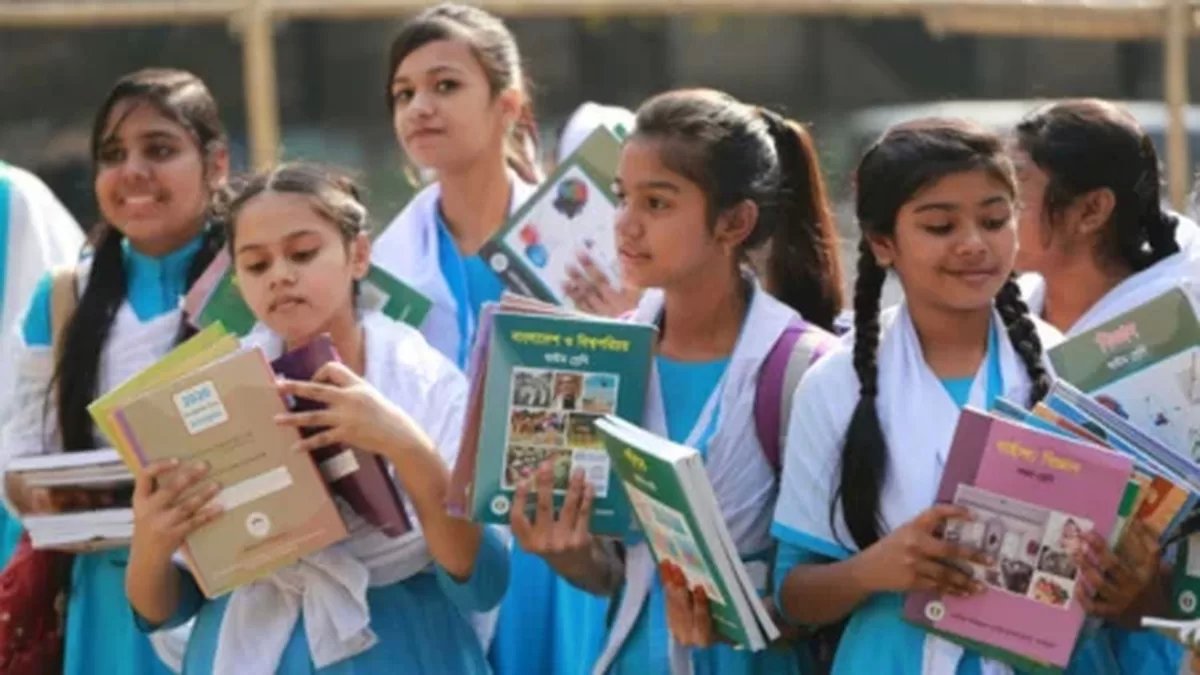
Private schools and colleges in Bangladesh will not be allowed to charge more than the government-approved admission fees for the 2027 academic year. They are also barred from collecting readmission fees from students who are promoted to the next class within the same institution.
The 2027 admission policy was issued on Tuesday by the Secondary and Higher Education Division of the Ministry of Education. Institutions found collecting excess fees will face cancellation of their Monthly Pay Order (MPO) status and legal action, it says.
The ministry has set maximum admission fees, including session charges, based on where an institution is located. Schools in rural areas can charge up to Tk 500, those in upazila municipality areas Tk 1,000, those in district headquarters municipalities Tk 2,000 and those in metropolitan areas outside Dhaka Tk 3,000.
In Dhaka metropolitan areas, MPO-listed institutions can charge a maximum of Tk 5,000. For partially MPO-listed and non-MPO institutions in Dhaka, the ceiling is Tk 8,000 for Bangla-medium students and Tk 10,000 for English-version students.
These fees will include monthly tuition, session charges and development fees. However, institutions cannot collect more than Tk 3,000 under the development fee category.
The policy allows schools to collect annual session charges from students who are promoted after passing their annual examinations, but it explicitly prohibits readmission fees.
Institutions have been told to arrange, as far as possible, waivers of admission fees for poor and meritorious students and students with special needs. Schools must also follow the ministry's circular of October 27, 2024, on increases in salaries and tuition fees.
After the application deadline, school authorities must submit class-wise figures of application forms sold and submitted to the admission committee in a prescribed format.
The policy also says admission test questions must be standard and suitable for the relevant class, based on textbooks of the National Curriculum and Textbook Board from the preceding class. Examination centers must have adequate ventilation and suitable seating. Examination committees or head teachers may seek help from relevant authorities to manage traffic congestion and maintain law and order during the tests.