
Several members of the Kennedy family have sued President Donald Trump to stop the construction of a triumphal arch he wants to build near Washington, according to new court filings.
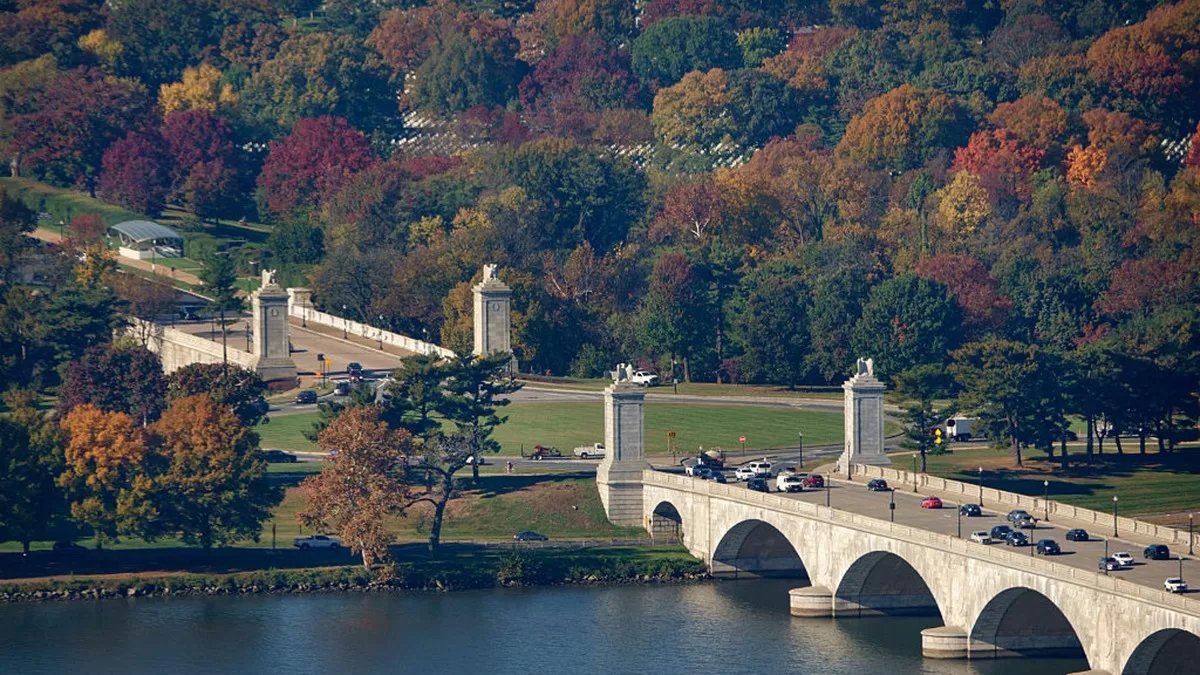
The proposed 250-foot monument, modeled on Paris's Arc de Triomphe, would stand on the Virginia side of the Potomac River between the Lincoln Memorial and Arlington National Cemetery, where American veterans have been buried since the Civil War. The family members say the 25-story arch would "cast a shadow" over memorials to their relatives buried at the cemetery.
The lawsuit says the arch would permanently cast shadows over and damage historically significant sightlines to the Kennedy family's gravesites and memorials, as well as to the memorials of hundreds of thousands of fallen American service members. It says the arch would block sightlines to the John F. Kennedy Eternal Flame and shadow the graves of other prominent Kennedys, including Robert F. Kennedy and Sen. Edward "Ted" Kennedy.
Nine Kennedys are named as plaintiffs, among them Robert Kennedy's daughter Kerry Kennedy and Edward M. Kennedy Jr. "Vanity should never stand in the way of valor," said Kerry Kennedy, president of the Robert & Ethel Kennedy Human Rights Center, in a statement after the filing in Washington.
Trump has promoted the project as both a landmark and a military asset. Speaking on November 2 at an event on improvements to the Lincoln Memorial Reflecting Pool, he said the arch could house drones and snipers. "It's right smack in the middle of everything, so very important for our military," he said. "But from a beautification standpoint, it'll be the most beautiful arch in the world."
The filing is the latest attempt to block the plan. Opponents have argued that the arch would obstruct the view from the Lincoln Memorial to Arlington National Cemetery. According to court filings, that clear view is meant to represent the reunification of the country after the Civil War.
The plans have been approved by a board led by people the president appointed. But other hurdles remain. On November 5, a federal judge temporarily blocked the project in response to a separate lawsuit brought by Washington and Virginia, which argues that Trump needs approval from Congress to build it.